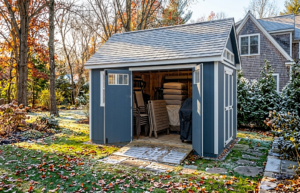
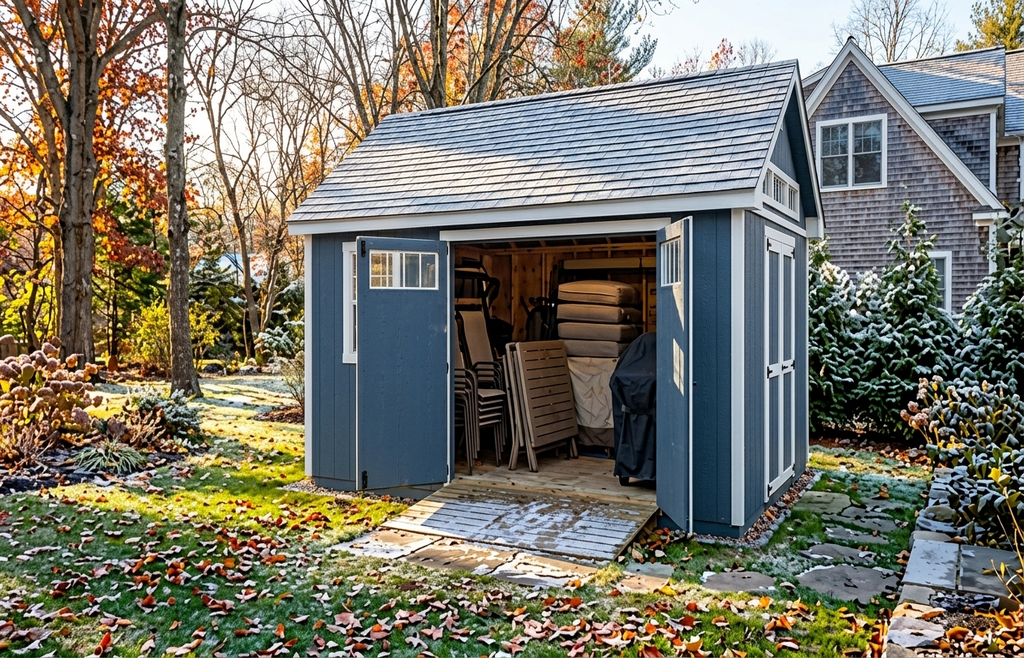
As the vibrant autumn leaves begin to fall across New England, it is a clear signal that a harsh winter is just around the corner. You have likely invested significant time and money into creating the perfect outdoor living space, complete with comfortable seating, dining sets, and high-quality grills. However, leaving these valuable items exposed to freezing temperatures, heavy snow, and relentless ice can cause irreversible damage to frames, fabrics, and mechanisms.
Expert Tip: Properly storing patio furniture for winter is essential to protect your investment. If you are looking for the most reliable sheds in Massachusetts to safeguard your backyard gear, the heavy-duty, custom-built structures from Dino Sheds are engineered specifically to handle New England’s extreme weather.
While flimsy tarps or cramming items into an already full garage might seem like quick fixes, they often lead to trapped moisture, rust, and pest damage. Let’s explore exactly how the winter elements threaten your outdoor patio furniture and why a dedicated backyard building is the smartest protection strategy to ensure your setup is completely pristine and ready to enjoy the moment spring returns.
The Cost of Harsh Winters on Outdoor Living Gear
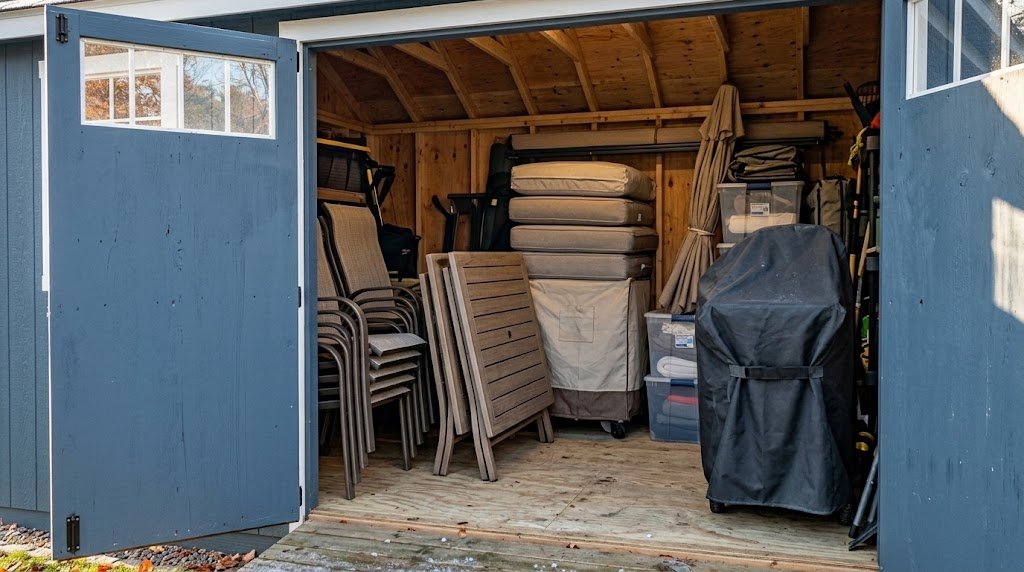
When the New England winter settles in, the combination of sub-zero temperatures, freezing rain, and heavy snow accumulation creates a brutal environment for any items left outdoors. Even furniture marketed as “all-weather” has its limits. Without a dedicated storage space, the financial cost of replacing rusted grills, cracked resin chairs, and mold-infested cushions year after year quickly adds up.
💰 The Hidden Cost of Winter: Replacing a single high-quality patio dining set and a rusted gas grill can easily cost upwards of $2,000 every few seasons. Properly storing patio furniture for winter in a protected environment is not just about maintenance—it is a financial strategy that preserves your gear and essentially pays for the storage space itself over time.
Understanding exactly how the winter elements interact with your outdoor gear highlights why relying on temporary fixes is a bad idea. Extreme freezing temperatures cause plastic and synthetic wicker to become incredibly brittle, leading to irreversible cracking under the weight of wet snow. Furthermore, when moisture from snowmelt seeps into the natural grain of wooden furniture and freezes, the expansion causes deep structural splitting, warping, and peeling paint. Metal components, especially wrought iron and steel grill bodies, will quickly succumb to aggressive rust when exposed to continuous moisture.
Many homeowners mistakenly assume that draping a heavy-duty plastic tarp over their dining set is an adequate solution. Unfortunately, this is one of the most common backyard mistakes. A tarp completely cuts off air circulation and traps ground condensation underneath the plastic, creating the perfect damp breeding ground for black mold on expensive fabric cushions. Coupled with high winter winds that can easily tear covers away, it becomes clear that tarps are meant for short-term summer rain, not for surviving months of harsh snow and ice.
Frost, Snow, and Moisture: How Winter Damages Patio Furniture
Garages are engineered to protect your vehicles from extreme weather, prevent rust, and provide secure parking. However, for many homeowners, the garage slowly transforms into a catch-all dumping ground for household overflow. When lawnmowers, plastic storage totes, exercise gear, and extra paint cans take over the floor footprint, your multi-thousand-dollar vehicles are forced out onto the driveway, exposed to harsh sun, winter frost, and fallen tree debris.
Relying on effective garage clutter solutions is essential to reclaiming this functional space. If you find yourself squeezing past stacks of boxes or navigating a hazardous maze of power cords just to reach a light switch, your primary home structure has run out of capacity. Moving bulky, weather-resistant equipment into a dedicated outdoor structure immediately clears garage floor space, allowing you to park your cars indoors where they belong.
💡 Space Check: If opening your car doors inside the garage feels like an obstacle course—or if you cannot pull in at all—transferring non-essential gear to a backyard structure is the most efficient way to restore order.
The Limitations of Tarps and Outdoor Covers
Many homeowners assume that wrapping their dining set in heavy-duty plastic tarps or fitted waterproof covers is a sufficient winterization strategy. While this seems like an easy, budget-friendly fix, relying solely on covers during a severe New England winter often leads to unexpected and costly damage by spring.
The primary issue with plastic tarps and non-breathable covers is moisture retention. As ground temperatures fluctuate throughout the winter, humidity rises from the soil and becomes trapped beneath the impermeable layer. Unable to evaporate, this stagnant condensation creates an ideal microclimate for black mold, mildew, and rot to thrive on fabric cushions and wooden frames. Trapped dampness also drastically accelerates rust on steel hinges and metal grill bodies.
Physical winter forces further compromise tarps over months of exposure:
- Wind Abrasion: Heavy winter gusts frequently catch beneath loose tarps, turning them into sails that drag and scratch delicate furniture finishes or tear the material entirely.
- Snow Load Pooling: As snow accumulates, tarps stretch and sag, creating heavy pockets of ice and wet snow that place immense downward pressure directly on glass table tops and chair frames.
- Pest Shelter: The dark, protected cavity created beneath a draped tarp provides an inviting winter nest for small rodents looking to chew through fabric cushions and wood.
Ultimately, outdoor covers are designed for short-term protection against summer rainstorms—not for defending your valuable outdoor investment against months of accumulated snow, ice, and freezing temperatures.
Storing Patio Furniture for Winter: Essential Protection Strategies
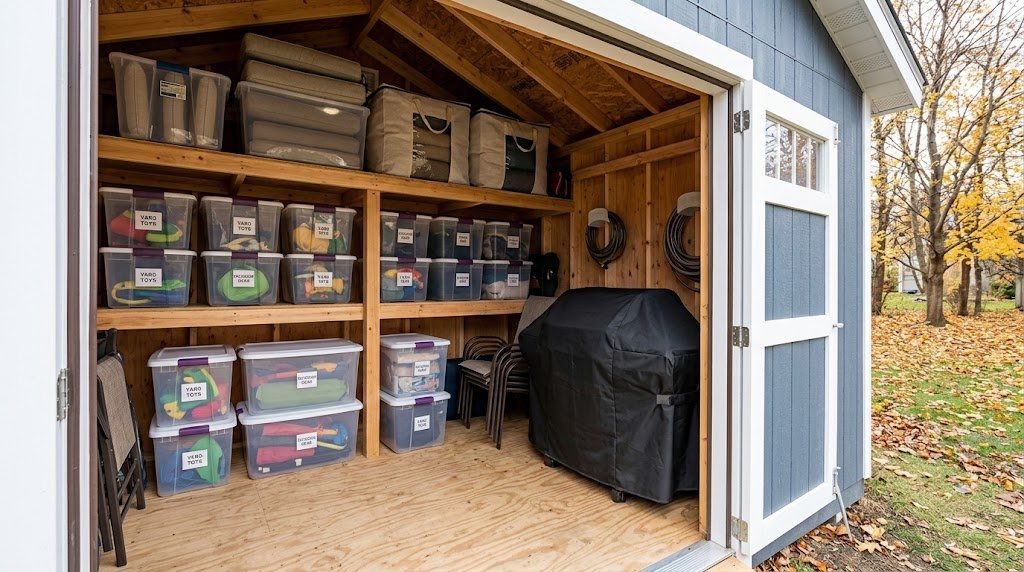
Properly storing patio furniture for winter requires more than simply hauling items out of sight when the cold weather sets in. To ensure your outdoor dining sets, lounge chairs, and grills emerge in spring in factory-fresh condition, you must implement a structured protection strategy before closing your shed doors for the season.
Scrub away summer pollen, dirt, and food residue using mild soap. Crucially, allow every frame and cushion to dry completely to prevent mold spores from multiplying during months in storage.
Never leave fabric cushions or canvas umbrellas on the floor. Utilize high wall shelving or overhead loft racks to isolate textiles from potential cold floor condensation.
Store soft fabrics in heavy-duty plastic bins to deter winter nesting pests. Disconnect all propane tanks from gas grills and store tanks safely outdoors in a well-ventilated space.
Executing these core preparation steps transforms winter storage into a simple, highly effective protection routine. Preserving frame finishes, fabric integrity, and mechanical parts ensures your outdoor living space is ready for entertaining the moment the first warm days of spring arrive.
Pre-Storage Prep: Cleaning and Drying Fabrics and Frames
Before moving your outdoor setup into your shed for the season, a thorough cleaning is non-negotiable. Packing away items coated in summer pollen, dirt, tree sap, or food crumbs locks in grime that becomes nearly impossible to remove by spring and creates an irresistible invitation for winter pests.
Start by cleaning your furniture frames based on their specific material:
- Metal & Aluminum: Wash surfaces with warm water and a mild detergent using a soft microfiber cloth. Rinse thoroughly and inspect steel frames for minor paint chips where moisture could trigger rust during the off-season.
- Wicker & Resin: Use a vacuum with a brush attachment to clear out trapped dirt from tight weaves, then wipe down with a damp cloth and mild soap.
- Teak & Wood: Clean using a specialized wood cleaner or soft sponge. Avoid high-pressure power washers, as they can gouge the grain and force deep water saturation into the wood fibers.
For cushions, canvas umbrellas, and fabric seating, brush away loose surface debris and spot-treat stains with a mild fabric cleaner or a mix of water and dish soap. If cushion covers are removable, wash them according to the manufacturer’s care instructions.
The Most Critical Rule: Absolute Dryness. Never rush furniture into storage while it is still damp. Trapping even trace amounts of moisture inside thick cushion foam or hollow frame tubing creates the ideal environment for black mold, mildew, and sour odors. Allow all fabrics and frames to air-dry completely in direct sunlight for at least 24 to 48 hours before packing them away into your custom shed.
Organizing Cushions, Grills, and Yard Toys to Prevent Mold and Rust
Once everything is clean and completely dry, organizing your items strategically inside your shed prevents physical damage, optimizes floor space, and protects your belongings throughout the winter months. Randomly piling gear inside creates cramped, unventilated pockets where trapped moisture fuels mold growth and accelerates rust.
Elevate & Seal: Pack dry cushions in heavy-duty plastic totes or breathable storage bags. Store them on upper shelves or overhead lofts—never directly on the concrete or wood floor where ground dampness settles.
Propane Safety Rule: Scrape grease traps to avoid attracting winter pests. Always disconnect fuel sources—propane tanks must never be stored inside a shed and should remain safely outside in an upright, well-ventilated location.
Consolidate & Label: Gather sports equipment, lawn games, and children’s outdoor toys into clear, stackable containers. Stacking bins vertically keeps floor space open for heavy machinery and clear walkways.
Establishing dedicated zones for textiles, cooking equipment, and play gear ensures proper airflow around every surface while keeping your shed organized, safe, and easy to navigate all winter long.
Why a Custom Storage Shed is the Ultimate Winter Protection
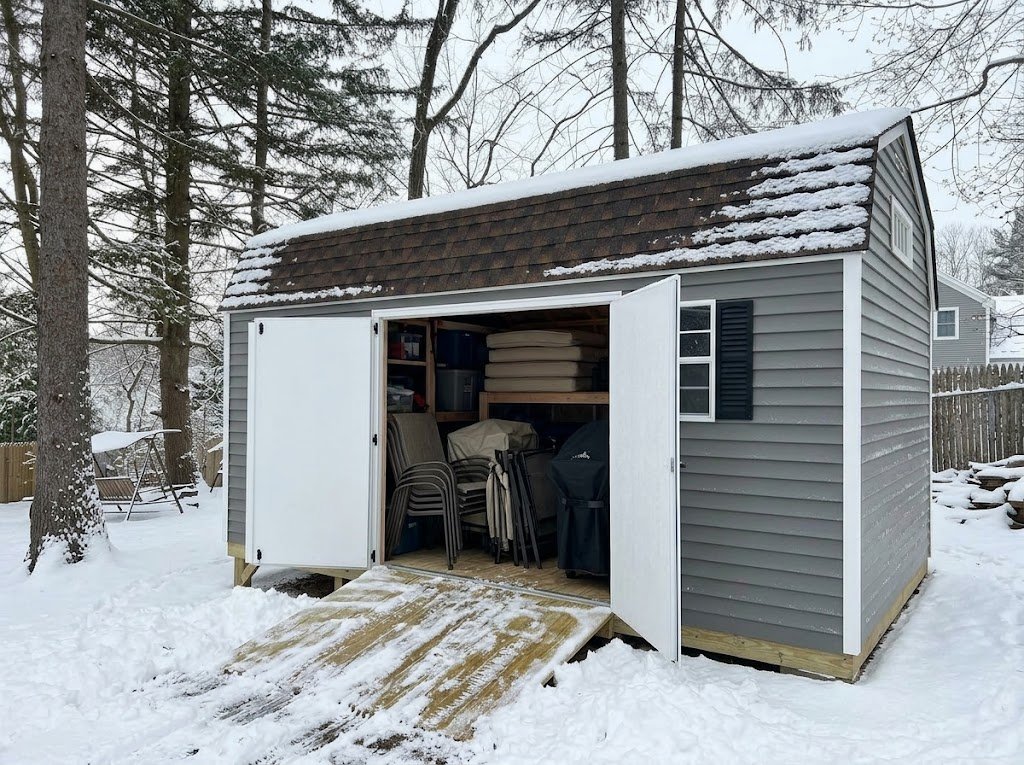
When evaluating how to winterize your property, cramming expensive dining sets and oversized grills into an already crowded garage—or relying on cheap plastic deck boxes—rarely provides the protection your outdoor investments deserve. A custom-built wooden storage shed offers a permanent, heavy-duty fortress engineered specifically to withstand the harshest New England winters.
Unlike thin metal or plastic kits that warp, sweat, and crack under extreme freeze-thaw cycles, a custom wooden structure delivers superior physical security and long-term durability. By centralizing your patio sets, lawn care machinery, and seasonal equipment into a dedicated exterior space, you preserve thousands of dollars in property while keeping your primary garage clear for vehicle parking all winter long.
Heavy-Duty Weather Resistance Engineered for New England Climate
One of the biggest struggles homeowners face during winter prep is accommodating bulky, oddly shaped outdoor gear. Modern patio setups often feature wide L-shaped sectional sofas, eight-person dining tables, deep-seating loungers, and large multi-burner gas grills that simply cannot fit through standard doorway openings or inside cramped storage lockers. At Dino Sheds, spacious floor plans and flexible entry configurations ensure that even your largest backyard investments fit comfortably without forcing you to completely disassemble every single piece.
- Wide Double-Door Entrances: Heavy-duty double doors provide wide clearance for rolling in large grills, riding mowers, and non-collapsible patio sectionals with ease.
- High Peak Ceiling Clearance: Elevated roof designs offer ample headroom to stack patio chairs vertically and utilize overhead rafter space for long umbrella poles.
- Customizable Square Footage: From compact 8×10 models to expansive 10×16 or 12×20 floor plans, tailored layouts ensure dedicated zones for both clean patio gear and heavy yard equipment.
By pairing high wall clearance with wide entryways, Dino Sheds eliminates the frustration of winterizing your yard. You no longer have to compromise on protecting your favorite outdoor living pieces or risk damaging furniture frames by jamming them into tight, poorly designed corners.
Spacious Floor Plans Built to Fit Oversized Outdoor Sets and Grills
One of the greatest challenges homeowners face during autumn winterization is finding room for oversized, awkwardly shaped outdoor gear. Modern backyard setups frequently feature deep-seating L-shaped sectionals, eight-person dining tables, zero-gravity loungers, and multi-burner gas grills. Forcing these bulky investments through narrow doorways or cramming them into tight plastic storage boxes often leads to bent frames, torn fabrics, and structural damage. At Dino Sheds, spacious floor plans and custom entryway options ensure your largest outdoor items fit comfortably without requiring complete disassembly.
- Extra-Wide Double Doors: Reinforced double-door entryways provide maximum horizontal clearance, allowing you to easily roll in wide gas grills, riding mowers, and non-folding patio sectionals.
- High Gable Headroom: Elevated roof designs offer generous vertical clearance, enabling you to stack dining chairs safely and utilize overhead rafter space for long umbrella poles.
- Tailored Square Footage: From compact 8×10 models to expansive 10×16 or 12×20 layouts, every building is scaled to provide dedicated zones for clean furniture and heavy lawn machinery.
By combining high wall height with generous door openings, Dino Sheds makes winterizing your backyard seamless. Protecting your valuable patio dining sets and cooking gear no longer requires compromising on space or risking damage during seasonal transitions.
Step-by-Step Guide: Preparing Your Backyard Gear for Winter Storage
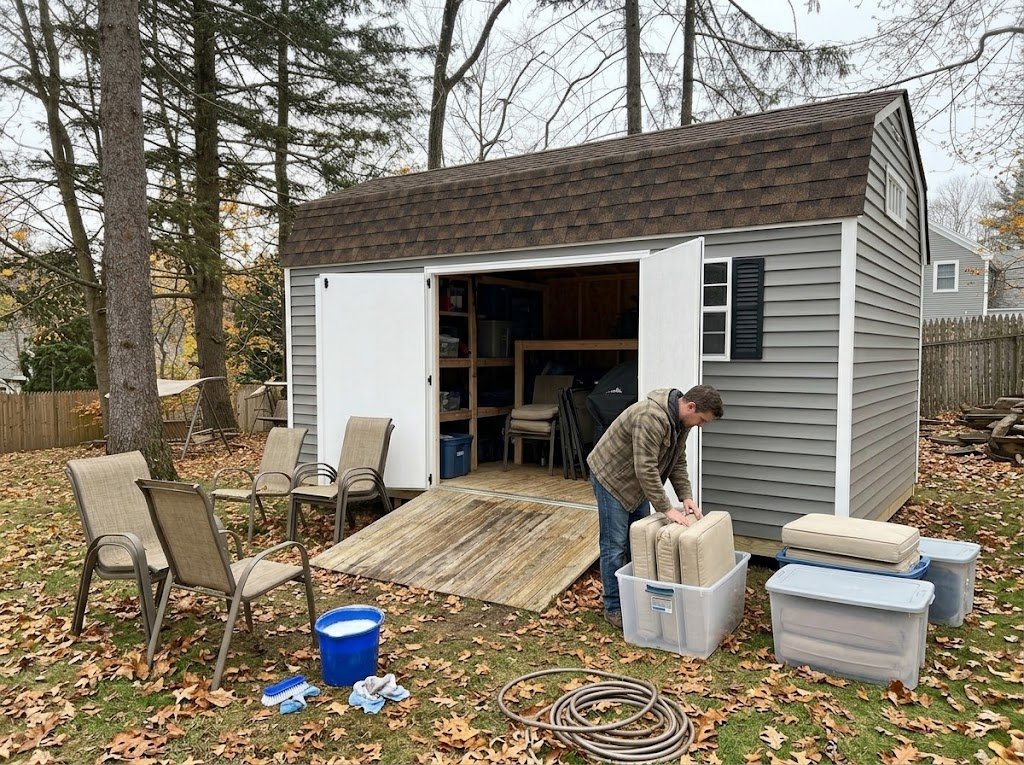
Winterizing your backyard requires a systematic approach to ensure no detail is overlooked. By establishing a clear, step-by-step workflow before moving items into your shed, you protect your outdoor furniture, streamline the packing process, and make spring unpacking completely hassle-free.
Check frame hardware, clean surfaces, and break down bulky dining tables or sectional seating.
Utilize high wall shelves, loft rafters, and wall hooks to keep cushions and umbrellas elevated.
Ensure propane tanks remain outdoors, lock double doors, and verify weather seals are tight.
Following this structured guide guarantees that every piece of outdoor gear—from delicate patio cushions to heavy-duty lawn equipment—remains organized, clean, and 100% protected throughout the cold New England months.
Step 1: Inspecting and Disassembling Large Patio Sets
Before moving heavy outdoor furniture into your shed, begin with a thorough physical inspection. Check all frame joints, table hardware, and seating structures for existing wear, loose bolts, or hidden rust spots. Addressing minor repairs before winter prevents structural damage from worsening while items sit in storage over the off-season.
Once inspected, strategically disassembling oversized dining tables, multi-piece sectional sofas, and large umbrellas makes a dramatic difference in how efficiently your shed space is utilized:
- Remove & Protect Glass Tops: Carefully detach tempered glass table tops from metal frames. Wrap the glass securely in moving blankets or thick bubble wrap, and store it vertically on edge against a wall stud rather than lying flat to prevent accidental shattering under pressure.
- Detach Table Legs & Sectional Connectors: Unbolt the legs from expansive dining tables and disconnect modular sectional pieces. Stacking flattened frames and upright chairs reclaims massive amounts of central floor space for heavy winter machinery like snowblowers.
- Organize Hardware Securely: Place all screws, bolts, washers, and assembly keys into sealable plastic bags. Clear-tape each bag directly to the underside of its corresponding furniture piece so reassembly in spring is fast and stress-free.
Step 2: Utilizing Vertical Space with Custom Shed Shelving and Racks
Floor space is the most valuable real estate inside any storage building. When storing bulky patio sets, leaving everything sitting at ground level quickly leads to chaos and increases the risk of cold floor moisture seeping into your gear. Taking full advantage of your shed’s vertical height keeps sensitive items protected and leaves central walkways completely clear.
Implementing smart vertical organization during winter packing ensures every square foot of your building is optimized:
- Heavy-Duty Wall Shelving: Install sturdy, wall-anchored shelves to hold stackable plastic totes containing patio cushions, outdoor throw pillows, and dining table linens. Elevating fabric items off the floor prevents moisture absorption and deters curious winter pests.
- Overhead Rafter & Loft Storage: Utilize high ceiling clearance by placing long, lightweight items—such as rolled outdoor rugs, cantilever umbrella poles, and hammock stands—onto overhead rafter racks or built-in loft platforms.
- Slatwalls & Heavy-Duty Wall Hooks: Mount horizontal tracks or heavy-duty utility hooks directly into wall studs. This provides a secure spot to hang folding lawn chairs, garden hoses, and long-handled yard tools completely off the floor.
Step 3: Securing Seasonal Equipment Until Spring
With your patio furniture cleaned, disassembled, and vertically organized, the final phase of winterization is securing the entire structure. Taking a few moments to perform a final safety and security audit ensures your valuable outdoor equipment remains undisturbed, safe from pests, and completely protected against severe New England winter storms.
- Recheck Fuel & Propane Safety: Double-check that all propane tanks have been disconnected from gas grills and placed outdoors in a well-ventilated, upright position. Never store volatile fuel sources inside an enclosed building.
- Inspect Weather Seals & Mesh Vents: Ensure door sweeps fit tightly against the threshold and confirm that gable vents are properly screened. This maintains healthy air circulation while completely blocking winter rodents from seeking shelter inside.
- Engage Heavy-Duty Door Locks: Fasten top and bottom interior barrel bolts on double doors before locking the primary exterior latch. Securing both doors prevents wind whipping during winter blizzards and ensures a tight seal against driving rain and sleet.
Completing these final security checks guarantees total peace of mind throughout the coldest months of the year. Your patio furniture, grills, and yard gear will remain dry, pristine, and ready for effortless setup the moment warm spring days return.
Frequently Asked Questions
Why should I store my patio furniture in a shed during winter instead of leaving it outside?
Leaving patio furniture exposed to New England winters can cause severe damage. Freezing temperatures, ice, and heavy snow can crack plastics, warp wood, rust metal frames, and cause fabric cushions to grow mold. A custom shed provides a dry, weather-tight environment to protect your investment and extend its lifespan.
Can't I just use plastic tarps or outdoor covers for my patio set?
While tarps offer minimal surface protection, they easily trap condensation and ground moisture underneath, leading to stubborn mold, mildew, and rust. High winter winds can also tear or blow them away entirely. A custom wooden shed provides superior, breathable protection without the risk of trapped moisture.
How should I prepare my outdoor cushions before storing them for the winter?
Always clean your cushions according to the manufacturer’s instructions and ensure they are 100% dry before storing them. Storing even slightly damp cushions can lead to severe mildew growth. Keep them in breathable fabric bags or sealed plastic bins, and store them elevated on shed shelving away from the floor.
Is it safe to store my gas grill in a backyard shed?
Yes, storing your grill in a shed is highly recommended to protect it from rust and snow. However, you must safely disconnect and remove the propane tank first. Propane tanks should never be stored indoors or inside a shed; they must always be kept outside in an upright position in a well-ventilated area.
Will mice and rodents damage my patio cushions inside the shed?
A properly built custom shed with a solid foundation, tight-fitting doors, and screened vents significantly reduces the risk of pest intrusion. To be extra safe during the colder months, we recommend storing cushions and soft fabrics in heavy-duty, sealed plastic bins on elevated shelves rather than directly on the floor.
Do I need a climate-controlled shed to store outdoor furniture?
No, a fully climate-controlled shed is not necessary for most standard outdoor furniture. A well-ventilated, weather-tight custom wooden shed is more than sufficient to block rain, heavy snow, and direct frost, which are the primary causes of winter damage for patio sets.
How can I maximize space in my shed to fit large patio tables and chairs?
Disassemble bulky items if possible, such as removing the legs from large dining tables. Stack your chairs, utilize vertical wall space with heavy-duty shelving for smaller items, and store lightweight cushions in overhead lofts. Planning your layout before moving items inside helps optimize the available floor space.
What size shed is best for storing a standard patio dining set and a grill?
For a standard 6-piece dining set, a large grill, and a few seasonal yard tools, a 10×12 or 10×16 shed is usually ideal. These dimensions provide enough floor space for bulky items without overcrowding, leaving you enough room to easily navigate inside during the winter months.
Should I cover my furniture even when it is inside the shed?
While not strictly necessary since the shed blocks the weather, using lightweight, breathable dust covers or old cotton sheets can keep your furniture clean and dust-free until spring. Avoid using airtight plastic covers inside the shed, as they can still trap residual humidity.
Can I store my lawnmower and patio furniture in the same shed?
Yes, our custom spacious floor plans easily accommodate both. We recommend designating one side of the shed specifically for mechanical equipment (like mowers and snowblowers) and the other side for clean patio furniture. This prevents gas odors, oil drips, or dirt from affecting your clean outdoor cushions.